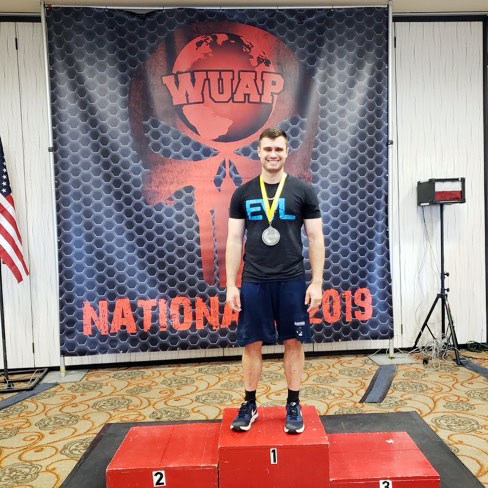
This month, we’re featuring Rachel Gitlevich’s workout playlist! Rachel is a personal trainer at FFC Old Town. She loves helping people feel empowered in their mind, body and soul. Outside of the gym you can find her spending time outdoors, practicing yoga and attending live music events.
Despite the crazyfact that only two U.S. states actually produce coffee (Hawaii and California, in case you were wondering), you can bet U.S. citizens drink a LOT of coffee. An average of 3.1 cups per day, in fact! We’ve rounded up a list of all the best coffee spots you should check out in Chicago’s Boystown below. Happy caffeinating!
Okay, maybe we just wanted to include Aje Café because of its stellar sandwich list, but rest assured, they DO serve coffee and their drinks are delicious. With a cozy vibe, free wifi for customers (they just kindly ask that you make a purchase) and a plethora of places to sit, this spot is ideal for your morning coffee or your afternoon pick-me-up.
Aje Café is locally owned and a great way to support small businesses. Additionally, they love to highlight art from local creatives, which never hurts if you’re looking for a place to work and get your creative juices flowing!
Sometimes you just need a quick getaway (especially when it comes to winter in Chicago, eek!). Look no further than Maison Parisienne for a jaunt across the Atlantic. With chic vibes and traditional French faire, you can be sure to find something that will pair well with your caffeine fix. Plus, this shop is eco-conscious and uses compostable and biodegradable cups, lids, water cups and straws.
If you happen to stop by in the warmer weather, you can sip your cappuccino on ‘La Terrasse’ – a spacious outdoor garden in the middle of Lakeview. Fun fact: you can also rent La Terrasse for events – birthday parties, baby showers or even reunions!
Dark Matter Coffee has been a staple of the Chicago coffee scene since 2007. They built their foundation on the ethos of sustainability and social responsibility; they work with aligned organizations and directly with farmers in El Salvador, Guatemala and Mexico to cut out the middle man and support fair business practices.
Osmium is one of six Dark Matter locations in Chicago (fun fact: a number of FFC clubs actually carry Dark Matter coffee!) and a great destination for your coffee needs. Dark Matter roasts their own beans (lots of floral notes) and has been pioneering a barrel-aging program that lends a unique flavor to the drinks. Try a barrel-aged agave latte for extra complexity!
Pick Me Up Café has been supplying Chicago with delicious drinks and food since 1997 and was one of the first locations in the area to offer vegan/vegetarian-centric dishes! Another unique attribute? You can get your java in frozen form: try the Cappuccino or Mocha shakes.
If you’re looking for a little pizzazz in your pick-me-up, try one of their seasonal concoctions. Some recent offerings include a latte spiked with Jameson and a chai latte spiked with spiced rum. Another bonus? Breakfast all day!
Are you starting to pick up a theme here? When it comes to good coffee, Boystown is one of the best for historically rich java. The Coffee & Tea Exchange dates back to 1975, when Steve (the original owner) roasted his beans right in the shop and displayed them in barrels to help inspire and educate customers on different types of coffee from around the world.
While they may love selling the beans (wholesale, in bulk or even in gift boxes), you can definitely get a good ole cup of joe to-go, too. Want something a little fancier than your basic black? Don’t worry – they have an extensive specialty drink menu. Past creations have even included riffs on your favorite FRIENDS/Central Perk drinks!
Whatever time of day you’re looking for a java jolt, you’ll definitely be able to hit the spot at one of these best coffee shops in Boystown. From lunchtime coffee cafes to breakfast-all-days, this should be all the convincing you need to keep this list handy!
Post written by FFC Contributor Megan Zink.
https://dev.ffc.com/wp-content/uploads/2019/11/Men-having-coffee.png10001440Sydney MeyerSydney Meyer2019-12-27 08:00:032019-12-27 08:00:03Boystown’s Best Cafes for a Cup of Joe
This article is from the perspective of a star collegiate tennis player who, after becoming injured, sought advice from a doctor/Pilates researcher. After just four weeks of Pilates exercises, he was off the injured list, played #1 his senior year of college and his shoulder never bothered him again! He credits most of his progress to his improved abdominal strength and its role in offloading stress on his shoulder.
This article explains how Pilates was initially developed for conditioning and therapeutic purposes and helps its participants develop the body uniformly. The article then dives into modern Pilates and how it has evolved to incorporate evidence-based principles with time-honored training techniques.
My Thoughts:
This article is a great reflection on how strengthening your core can support the rest of body to avoid overcompensating elsewhere. It also shines a light on how Pilates is a wonderful way for athletes to cross-train. Athletes are able to strengthen their smaller, stabilizing muscles in order to support their larger muscles during performance. This leads to fewer injuries and improved athletic performance. Through Pilates, this is achieved by finding the proper organization of the muscles around the bone and/or the bone within its socket/joint. From there, we find stability and range of motion. After we have established the proper function and mobility of that muscle or joint, we then work towards flexibility and increasing range of motion. This process ensures longevity by practicing healthy movement patterns.
This article then goes on to explain “modern Pilates” and the benefits of consistent practice. Consistency is key in order to see results. If you practice Pilates 2-3 times per week, you will see results in just a few short weeks! Consistent Pilates practice results in improved muscular endurance and strength, reduced body fat, increased flexibility/mobility and improved posture. Pilates also aids in active aging. Through functional fitness, you are able to improve balance which means fewer falls, improved bone mineral density and improved brain fitness. This includes improved concentration, attention span, body awareness and more.
Pilates is also beneficial for special circumstances such as prenatal, back pain, osteoarthritis and neuromuscular degenerative issues. For prenatal women, Pilates can lower blood pressure, improve flexibility and spinal curvature, and add significant improvements during labor such as fewer caesarian births, episiotomies or instances of obstructed birth. As for people with neuromuscular degenerative issues, Pilates aids in improving balance, core strength and provides stress relief as well as practicing muscle control.
Overall, this article is extremely descriptive on the countless benefits Pilates has to offer.
https://dev.ffc.com/wp-content/uploads/2019/12/Untitled-design-1-copy.png10001440Sydney MeyerSydney Meyer2019-12-19 08:00:302019-12-19 08:00:30The Science of Pilates: My Thoughts
Sweet, nutty and tangy, this vegan, gluten-free salad hits it all. The ingredients in the salad work double-duty as the ingredients for the oil-free dressing. Walnuts provide healthy fats. Apples and raisins add natural sweetness, and Dijon adds a tangy kick. This will win over any veggie skeptic. Serve with Butternut Squash Bisque, Mushroom Soup with Barley and Leek or Farro Vegetable Soup for a satisfying dinner.
Level: Easy
Servings: 6
Ready In: 15 minutes
Ingredients
1/2 cup chopped walnuts
1/2 cup raisins
2 sweet, crisp apples (like Gala, Fuji, Braeburn or Honeycrisp)
3 stalks celery, thinly sliced
2 tablespoons Dijon mustard
Salt and Pepper, to taste
2 tablespoons Champagne vinegar
1 bunch lacinato kale
Directions
To prep ingredients:
Soak raisins in about 1/4 cup warm water, to soften. Toast walnuts in a 375 degree oven, 10-13 minutes, until golden and aromatic. Remove and let cool.
To make salad:
Strip kale from stems and thinly slice.
Place half of the celery, apples, walnuts and raisins in one bowl with the kale. This is your salad.
Place the other half in another bowl, along with the raisin soaking liquid, and mustard. This will become your dressing.
Place dressing ingredients in a blender with a couple tablespoons of water. Puree. Dressing should be a pourable, creamy consistency. Add water as needed to reach this consistency. Taste for salt and pepper.
Add dressing to salad ingredients. Use your hands to mix well.
Apple Varieties: Choose any sweet, crisp apples for this salad. Or, try it with pears!
Kale Varieties: Kale comes in lots of varieties, including green curly, dark Tuscan and purple. Even the dark Tuscan kale has similar varieties like Dino and Nero. The original Italian version of this recipe calls for dark Tuscan kale, but you can use whatever variety you like.
Champagne Vinegar: This clear vinegar provides a light, mild flavor and is not as harsh as other acids like white wine vinegar or lemon juice. You can use it in other recipes calling for these ingredients.
Yield: 9-10 cups
Post written by FFC group fitness instructor Katie Simmons. Some photos provided by Katie Simmons.
More about Katie: Katie is a group fitness instructor at FFC and is also a personal chef based in Chicago. She specializes in creating delicious, healthy recipes for those with special dietary concerns like gluten-free, oil-free, plant-based, and low-residue. You can see more at www.plants-rule.com. You can also see more recipes at www.facebook.com/plants-rule and follow her on Instagram at @chefkatiesimmons.
Nutrition Facts
Serving Size:
About 1/6 recipe, 1 – 1 1/2 cups
Amount Per Serving:
Calories 134.17
Calories From Fat (44%) 59.35
% Daily Value
Total Fat 7.1g 11%
Saturated Fat 0.68g 3%
Cholesterol 0mg 0%
Sodium 99.8mg 4%
Potassium 440.89mg 13%
Total Carbohydrates 17.27g 6%
Fiber 2.04g 8%
Sugar 0.62g
Protein 4.13g 8%
Calcium 59.99mg 6%
Iron 89.04mg 495%
Vitamin A IU
Vitamin C 0mg 0%
https://dev.ffc.com/wp-content/uploads/2019/12/Untitled-design-1.png10001440Sydney MeyerSydney Meyer2019-12-12 08:00:402019-12-12 08:00:40Vegan, Gluten-Free Recipe: Kale Waldorf Salad
This month, we’re featuring Victor Virgilio’s workout playlist! Victor is the Operations Manager for FFC Park Ridge. After working in hotel management, Victor decided to follow his passion and work in the health and wellness industry. He has now been with FFC for 5 years, working at Gold Coast, Old Town and West Loop before landing at Park Ridge.
https://dev.ffc.com/wp-content/uploads/2019/12/runner-listening-to-music.png10001440Sydney MeyerSydney Meyer2019-12-02 10:22:082019-12-02 10:22:08FFC Featured Playlist – Victor Virgilio
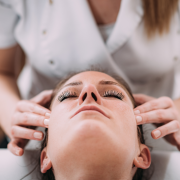
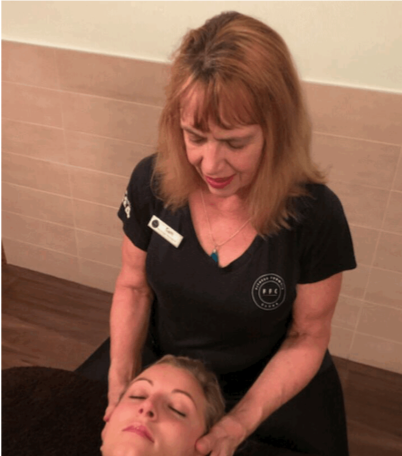
Stuffy nose, splitting headache and trouble sleeping. Sinus congestion can drain your energy levels for weeks. Did you know that massage therapy can provide relief for sinus congestion, pressure and headaches? Read on to learn how massage can promote drainage and alleviate pressure in your sinuses.
How Your Sinuses Become Inflamed
Your sinuses consist of eight hollow spaces in the bones
of the forehead, cheeks and temples. Healthy, open sinuses are lined with
sticky mucus to ensure that air going into the lungs is moist, warm and free
from dust, dirt and pollutants. Without these filters, lungs, kidneys and blood
can become permeated with toxins.
With sinus congestion, sinusitis or sinus infection, the
linings become inflamed. The tissues become full of mucus and drainage is
blocked. Increased pressure causes pain, swelling around the eyes, clogged
nasal passages, chills, fever, dizziness and loss of appetite. If these tissues
do not drain properly, an infection can ensue, causing further pain and
discomfort. While antibiotics will remove the infection from the tissues, they
do not promote adequate drainage of the blocked sinuses, which is why some
people suffer from chronic sinus infections.
During a sinus and headache treatment, your massage
therapist will use proven massage techniques on the head, neck and upper chest
to promote drainage. In addition, he or she may use gentle craniosacral techniques
and acupressure points to help break up sinus congestion and promote drainage
of the sinuses.
Sinus
and headache treatments can be done in 30 minutes. Consider adding on 30
minutes to your regularly scheduled massage therapy to relieve your symptoms.
Tension headaches, migraines and sinus pain have similar treatments, but with
modifications for the specific symptoms and causes.
Most clients notice decreased
congestion within 15 minutes of having a sinus treatment, and for
chronic sinusitis sufferers, regular sinus treatments can help reduce the
frequency of infection or even eliminate them completely.
A massage therapist could potentially be your greatest ally in your battle against sinusitis.
Post written by FFC Contributor Sam Margaret Wolf.
Sam Margaret Wolf, LMT, CST, is a Board Certified Massage Therapist at FFC Park Ridge. To schedule an appointment with Sam, please email mwolf@ffc.com.
https://dev.ffc.com/wp-content/uploads/2019/11/Woman-getting-head-massage.png10001440Sydney MeyerSydney Meyer2019-11-27 08:02:522019-11-27 08:02:52Feeling Congested? Learn How Massage Therapy Can Help
Coffee can be many things for many people. A ritual. A means of productivity. A necessary evil. Whatever it is for you, we want to help you find the best coffee for any occasion. Here are a few of our favorite coffee shops in Chicago’s South Loop!
While you can most likely grab a quick cup to-go, you’ll want to stay and soak up this upscale, reimagined diner/delicatessen in all its glory. From matzoh ball soup and the famed Rubin’s Reuben to melts, plate dinners and of course, breakfast all day – you’ll surely find something that pairs well with your coffee.
When you want a sweet treat: Petite Vanille – 800 S Michigan Ave
Petite Vanille is the younger, smaller sibling of the Chicagoland Vanille Patisserie collection and is situated inside Grant Park Bistro, within the classy newcomer Hotel Essex (redone inside the building that used to house the Essex Inn). It’s also an excellent spot to grab a cup of something warm (or cold, we won’t judge) when you’re in the area. Just try not to drool on the many display cases of macarons, cakes and scones during your visit!
Café Press Chicago is a quirky, cool coffee shop that pays homage to Printer’s Row – the area of the city that was primarily home to printing and publishing businesses in the late 1800s (especially thanks to the construction of the Dearborn Station). If you leave this spot hungry, it’s your own fault. In addition to delicious coffee courtesy of local Chicagoland Sparrow Coffee Roastery, they also have an extensive food menu.
When you want to impress your coworkers: Stan’s Donuts – 26 E Roosevelt Rd
Fun fact: the original Stan’s is actually in LA – but when Rich Labriola (of the Chicago Labriola Baking Company) saw Stan on a travel show, he knew he had to coax him to the Midwest.
While their focus happens to be donuts (woo your coworkers with a baker’s dozen and don’t miss out on the vegan and gluten-free options for added options), the coffee is something to be held sacred too – it is the fruit of a partnership between Stan’s and local Chicago roastery Passion House Coffee Roasters.
When you want some Chicago culture: Bridgeport Coffee – 3101 S Morgan St
Bridgeport Coffee has four locations in total and is decidedly Chicagoan. President and founder Mike Pilkington began Bridgeport Coffee in 2004 after a long time spent in the restaurant industry. Bridgeport believes in knowing where your coffee is coming from and has a direct relationship with their growers.
Their original location, at 31st and Morgan, resides in a former pharmacy and has all the historical charm you could expect. Bridgeport also offers office coffee service and distributes at Whole Foods and other Chicago establishments!
Fun fact: coffee may even help you get the most out of your next workout – an article on Time.com states that drinking coffee before a workout can allow you to power through it more easily and with less pain. The article also states that caffeine may help muscles burn more fat during a workout!
Check out the article for yourself and consider it all the more reason to hit up one of these great locations (and then pay a visit to one of our FFC locations throughout Chicago!).
Post written by FFC contributor Megan Zink.
https://dev.ffc.com/wp-content/uploads/2019/11/Woman-holding-coffee-mug.png10001440Sydney MeyerSydney Meyer2019-11-21 13:11:422019-11-21 13:11:42Coffee Shops for Any Occasion in Chicago’s South Loop
It’s also officially cold and flu season in Chicago. Of course, it’s always best to avoid getting sick in the first place, but if you do come down with a bug, here are some tips to help you get back to better health in a timely fashion.
Basic Tips for Avoiding the Flu or a Cold
Wash your hands often with soap and water, ideally for at least 30 seconds, or with an alcohol-based hand rub, especially after coughing or sneezing and before eating. Because the colder months are typically drier than warmer months, remember to moisturize your hands often as well to avoid cracking in the skin. Breaks in the skin make you even more susceptible to illness because your skin is your first exterior line of defense.
Cover your mouth and nose with a tissue when you cough or sneeze. If you don’t have a tissue, use the upper part of your sleeve or the inside of your shirt. Cold and flu bacteria and viruses are easily airborne, so the more you can limit those particles floating around, the better the chance you’ll have of avoiding getting sick.
Avoid touching your eyes, nose and mouth. Those openings are easy pathways for pathogens to enter your system.
Avoid close contact with people who are sick; give them space and time to get better (unless they need help getting some remedies, but then simply drop them off and split!).
Stay home when you’re sick. Don’t be one of those people who goes into work and spreads all those germs around. Stay home a day or two, rest up and catch up on your favorite shows.
Clean and disinfect frequently-touched surfaces, especially when someone is sick. Items like your phone and door handles are frequently forgotten. If you’re working out in a gym, which are cauldrons for germs, consider wiping down any benches or weights you’re using.
Treat your body well; get plenty of sleep, manage your stress, drink plenty of healthy fluids (water, tea, etc.), eat nutritious foods, stay physically active and take quality supplements. All of these actions work in concert to keep your body healthy and immune system active.
Consider getting a flu shot. This is a more personal decision, as the flu vaccine is never foolproof with the flu virus constantly changing, and some believe that the shot can trigger the virus in some populations. For instance, it was estimated that the 2018 flu vaccine was about 47% effective, while the vaccine for 2017 was only 36% effective.
What if you’ve taken all the necessary precautions but you still get sick? How can you tell if you have a cold or the flu?
Cold symptoms are usually milder than the flu, and people with colds are more likely to have a runny or stuffy nose than people with the flu. The flu often comes on suddenly and the symptoms are more severe.
Some common symptoms of the flu include: • Fever or chills (older adults may not have a fever) • Cough • Sore throat • Runny or stuffy nose • Muscle or body aches • Headache • Fatigue • Vomiting and diarrhea (more common in children)
Once you’ve determined if you’ve come down with a cold or the flu, it’s time to take action.
Take it easy and stay home. When you’re feeling under the weather, try to get as much sleep and rest as possible. Resting helps your body divert its energy and resources to fighting the infection. Staying home also lessens the chance you will infect others while you’re at your most contagious stage. Depending on the severity of your symptoms, you could also call your health care provider. Your provider can prescribe antiviral medication to lessen the impact of the flu.
Speaking of medications, over-the-counter medicines can help. Pain-relievers such as ibuprofen and acetaminophen can help with chills, aches and sinus pain.
Drink plenty of fluids. Especially with a fever, you could be sweating more and losing fluids via vomiting or diarrhea. Water, teas and soup broth can help symptoms, especially hot tea with lemon. Try to avoid alcohol and caffeine.
Try to eat healthy foods. Your body needs nutrients to fight the infection, so try to eat fruits and veggies that have an array of vitamins and minerals.
Now that the cold and flu season is upon us, hopefully these tips will help keep you healthy during the holidays, or at least aid in a speedy recovery!
Post written by FFC Pilates and Group Exercise Instructor David Bohn.
https://dev.ffc.com/wp-content/uploads/2019/11/Woman-washing-hands-at-sick.png10001440Sydney MeyerSydney Meyer2019-11-14 08:00:342019-11-14 08:00:34How to Stay Healthy During Cold and Flu Season
Every one of us has different motivations for hitting the gym. Whether we want to be in better shape, improve our health or optimize our strength and speed, there are many ways to go about reaching our goals. Some may choose to work out on their own, join a group fitness class or follow an online workout guide, while others may hire a fitness professional to create a customized exercise program for them. In my case, I chose to hire a personal trainer to get me in the best shape of my life.
My journey started at the beginning of January. I know, very cliché – new year, new me. I wanted a change, and not just a physical change, but a complete transformation physically, mentally and emotionally. I was already hitting the gym on a regular basis, but I needed someone to hold me accountable and push me beyond my limits. I reached out to a personal trainer that I knew had helped get his clients get results. I thought to myself: what do I have to lose?
The first step with my personal trainer was an introductory phone call followed by an email questionnaire. After I answered the questionnaire, my trainer called me to really dig into why I wanted to make this change for myself. I had just moved across the country after a break up, and I needed help getting in a better head space to work on myself. I wanted to prove to myself that I could commit to this next chapter in my fitness journey, and I needed the accountability partner that a personal trainer can provide.
The hard work began with making sure I was set up for success in regards to nutrition. After we were comfortable with my nutrition, we tackled exercise. My programming incorporated early morning cardio sessions and evening lifting sessions where I was able to work off the stress of the work day. My programs were emailed to me on a weekly basis, and I was always excited to see what each week would bring because I could feel the changes taking place. At first, I wasn’t sure I could follow through with the program, but I had to keep in mind why I signed up with my trainer in the first place. Knowing that I could reach out to my trainer at any point for motivation was the best feeling because I knew I wasn’t alone in this journey.
After a few months, my friends started to notice the changes in my physique, which boosted my confidence and motivated me to work even harder knowing that other people were also seeing my results. At the end of the day, it was all about being consistent with my nutrition, cardio and weight lifting, and I could see all the hard work paying off.
One day, my personal trainer did a side-by side photo comparison from when I started training with him to present day. I couldn’t believe it – my waist was smaller and my back and shoulders were broader. With my permission, he posted this comparison on his Instagram and the feedback we got was incredible. We were both very proud of what I was able to achieve with his coaching.
With all the progress I had made and all the confidence I had gained, I had a new zest for life and decided to become a personal trainer myself. After nearly a year of working with my personal trainer and seeing my own progress, I was able to perform better at work and help my own clients reach their desired results. It feels amazing to see how they have changed since the day we first met. It is so rewarding to make such a positive impact in their lives, just like my personal trainer has in my life. I love coaching people to live healthier lives and seeing the confidence and discipline they gain.
The most common question I get asked is, “You’re a personal trainer, so why do you have a personal trainer?” My response is this: everyone can benefit from having a personal trainer. Whether you need someone to keep you accountable or someone to push you past your limits, a personal trainer can help you achieve better results. Great athletes didn’t get to where they are now without someone holding them accountable, pushing them, believing in them, and knowing they can do better. So I ask you, what is the reason you are going to hire a personal trainer? What changes do you want to make in your lifestyle? What great results will you achieve with the help of a personal trainer?
Post written by FFC Gold Coast personal trainer Marc Zavala.
Marc is a personal trainer at FFC Gold Coast who is passionate about fitness and helping people go beyond their goals. He believes exercising, building healthy eating habits and having fun are important for overall well-being. He specializes in body transformations, form correction and coaching healthy behaviors to achieve and maintain a healthy way of life. Marc has 7 years of personal training and nutrition coaching under his belt. Contact Marc by email (mzavala@ffc.com) to schedule a complimentary consultation today.
https://dev.ffc.com/wp-content/uploads/2019/11/personal-trainer-2280x1400-3.jpg14002280Sydney MeyerSydney Meyer2019-11-07 13:18:212019-11-07 13:18:21Why I Work With a Personal Trainer
Looking for new workout tunes? Look no further! This month’s playlist comes to us from Natalie Casper. Natalie is the new Marketing Manager for FFC, and she is so excited to be a part of the FFC Family. You’ll be able to find Natalie in the clubs attending HIIT, spin and yoga classes–be sure to say hello!
https://dev.ffc.com/wp-content/uploads/2018/04/Get-Better-Fitness-Results-With-Workout-Music-FFC-Chicago.jpg7001140Sydney MeyerSydney Meyer2019-11-01 07:00:172019-11-01 07:00:17FFC Featured Playlist – Natalie Casper
Pumpkin skincare products have been popular for many years in the spa industry – especially pumpkin peels. Every year we see them advertised in almost all spas and salons – pumpkin facials, pumpkin peels, pumpkin pedicures. And of course pumpkin is popping up everywhere else – pumpkin pies and pumpkin coffee are everywhere!
But what are the
benefits of pumpkin skincare?
Nowadays, this fairy tale
fruit is used for more than just delicious pies, carvings for Halloween or for
Cinderella’s favorite mode of transportation – and there’s good reason. Pumpkin
is a type of winter squash, believed to be native to North America and widely
grown for commercial purposes. Besides being used for pies and Halloween activities,
pumpkins are used in the beauty industry to create products that help managing
aging skin.
Here are a few benefits
of pumpkin skincare services and products:
Very nutritious and high content of vitamin A
It has a high oxidant content
Promotes weight loss – high fiber content
Great for immunity- packed with vitamin C
Great for eyesight
Promotes healthy skin and hair
Since pumpkin is very
rich in vitamins A, C and E, as well as antioxidants, pumpkin skincare products
are generally used for anti-aging treatments. They can help reverse sun damage,
promote the production of collagen and protect the skin from free radical
damage that’s responsible for wrinkles.
Pumpkin skincare
products are also used as an exfoliating agent; pumpkin enzymes are incorporated
in different scrubs and exfoliants to help remove dead skin cells naturally.
The zinc and B vitamins found in pumpkin help protect cell membranes and fight
acne by increasing circulation and improving cell turnover.
Pumpkin peels are
getting popular and are pretty safe to use for all skin types*. Loaded with
alpha and beta hydroxy acids, pumpkin peels can exfoliate efficiently and
promote younger-looking skin. Mainly used for dark spot treatment, acne or fine
lines treatment, pumpkin peels are safe for sensitive skin, pregnancy or
diabetic patients as they are not highly reactive and will not irritate the
skin.
Series of peels are
recommended for optimal results. Usually sessions of 4-6 treatments are done
for a complete cycle, every 2 weeks. Post care skin products should be used
during the treatment for optimal results.
Try it yourself!
Fitness Formula Clubs
carries a Rhonda Allison pumpkin skincare line at all locations with a spa.
Please consult with your esthetician for a complete treatment plan, or email
Laura at lmoldovan@ffc.com for more
information!
*Disclaimer: Always check with your physician when considering any type of peel.
https://dev.ffc.com/wp-content/uploads/2019/09/Pumpkin-Skincare-Benefits-of-Including-Pumpkin-In-Your-Beauty-Routine-Wellness-FFC-Chicago.jpg7001140Sydney MeyerSydney Meyer2019-09-27 10:40:542019-09-27 10:40:54Pumpkin Skincare: The Benefits of Including Pumpkin in Your Beauty Routine
FC Union Station Pilates instructor Nicole Gibson highlights a great article from Women’s Health Magazine that goes over everything you need to know before your first Pilates class.
Pilates is more than a fitness routine; it acts as a form of physical therapy to fix alignment and improve mobility. The key thing with Pilates is control. Slowing down the movements and controlling the body is what tones the muscles, increases muscular endurance, and aids in good posture.
Many athletes and celebrities swear by Pilates because it is hardcore but low-impact. This article goes on to describe everything you need to know before your first Pilates session, from what happens in a class to what to wear, this article even explains how often and what Pilates is good for!
This article hits the nail on the head. It really explains what Pilates can do for the body while being extremely informative for those who might not know what to expect from this workout. The author mentions how you can achieve the same results with mat or reformer classes, and this is true! One thing I will add to their statement is that, along with more movement variation, the reformer offers resistance.
Mat work is a body-weight series of movement where the reformer (and most other pieces of equipment) have added resistance springs to load and challenge the body in a different way. That is pretty much the only difference. About 90% of movements can be performed on all apparatus in some variation.
This is part of the
beauty of Pilates, in my opinion. The hundred is the hundred is the hundred. Whether
you are adding resistance or putting your body at a different angle, it
requires the same muscle mechanics.
This article also
touches on “Classical” versus “Contemporary” Pilates. Yes, there is a big
difference between the two styles, but both offer the same benefits—both are
still Pilates. In my opinion, “contemporary” Pilates is more of an aerobic form
of exercise where “classical” is more anaerobic. There are studies that show
benefits for both, however, Joseph Pilates created the work as an anaerobic,
low-impact way to control the muscular movements of the body.
Overall, Pilates has been around for almost 100
years and there is proof behind the benefits of consistently practicing this
work.
https://dev.ffc.com/wp-content/uploads/2019/09/Everything-You-Need-To-Know-About-Pilates-Before-Your-First-Class-FFC-Pilates-Chicago.jpg7001140Sydney MeyerSydney Meyer2019-09-27 10:14:482019-09-27 10:14:48Everything You Need to Know About Pilates Before Your First Class: My Thoughts
Summer brings a lot of wonderful things – sun, beach – even vacation! But many of those things can also wreak havoc on our skin. Most of us abuse our skin during this time, forgetting that some of the activities we do may have a long-term effect on our skin. Check out some tips from FFC Park Ridge spa manager Laura Moldovan.
Sun Damage
Maybe we can’t wait to
get to the pool or beach after a long week at work, but often forget to reapply
sunscreen on a regular basis (every 60-90 minutes is ideal). The damage the sun
can do is irreversible. Dehydration of the skin can appear during the summer
months as well, through overexposure to the sun (repeated sunburns) and by not
staying well-hydrated.
Temperature Extremes
Another factor to take
into consideration during the hot summer months is the extreme difference in
temperature from the outside environment to the inside where we work or live.
Our skin needs to adjust from the hot weather to the cold air from our AC units
in our homes, workplace or car. Cells have to adapt to this transition a few
times a day, which can be taxing.
So what are some ways to
help speed up the skincare recovery process? Here are a few easy ones:
Water, water, water!
Keep hydrated! Drink water throughout the day.
Keep up with a skin care routine daily.
Clean your skin by removing makeup every day; use purified water if possible. Make sure the cleanser you are using is appropriate for your skin type. Use a gentle scrub or an exfoliant once or twice a week to help remove dead cells and help new cell growth.
Use high quality products for your skin.
Choose serums that have ingredients like hyaluronic acid, well known for its property to retain moisture.
Apply sunscreen before exposing your skin to sunlight.
Pretty self-explanatory. Just do it.
Eat a balanced diet.
Make sure to include fruits, vegetables and greens and watch out when drinking alcohol since it can really dehydrate the skin.
Sleep with a humidifier in your room.
Again, self-explanatory but really important – especially if you have the heat or AC running at one extreme or another.
Consult your skin care expert & try to get a facial once a month.
Try the FFC Signature Facial, which also includes a back facial, which is an important, often-missed area!
https://dev.ffc.com/wp-content/uploads/2019/09/Summertime-Skin-Care-Recovery.jpg7001140Sydney MeyerSydney Meyer2019-09-26 16:18:302019-09-26 16:18:30How to Rehab Your Skin After Summer
FFC Gold Coast Registered Dietitian Chelsea Rice shares information on sugar cravings, their causes and what they might mean (oh yeah – and how to combat them). Read on!
Do you crave sugar after every meal? First thing in the
morning? Mid-day to help you through your afternoon work slump? Well, you
are not alone. Sugar cravings are highly common and, in this sugar filled world,
it is very easy to reach for quick, easy, sugary snack such as a granola bars,
chocolate, cookies, etc. Consuming foods with added sugar on a daily basis
can make you feel out of control and defeated. You get a strong urge for
something sweet and feel as though nothing can help overcome it other than
giving in.
Many people ask, “what can I do to stop sugar cravings?”. Before answering that, have you ever thought about the “why” behind a sugar craving? Let’s dig a little deeper into a few possibilities for what may be driving those cravings so you can begin to feel more in control of them when they occur and improve your nutrition.
Possible Sugar Cravings Causes
Lack of sleep.
Lack of adequate sleep
can make your body feel depleted, which leads us to feel like we need something
to help increase our energy. Most people use sugar as a way to feel that
“boost”. However, that boost of energy from a sugary food or beverage is very
short lived by sending your blood sugar levels soaring, then quickly crashing,
which can lead to more fatigue.
Instead of making a trip
to the vending machine or snack area of the office, take a 15-minute walk and
sip on an unsweetened green tea. This will help you feel energized without
crashing again a few hours later!
Imbalanced gut bacteria.
A diet high in processed
foods and added sugars can decrease the amount of “good” bacteria and increase
the “bad” bacteria in your gut. This imbalance can actually increase sugar
cravings, which can then damage your gut further. It is a vicious cycle! The
sugar-loving “bad” bacteria actually may increase your sugar cravings by
changing your taste receptors, releasing hormones that make you feel good, and
affect appetite by making you feel hungry when you aren’t.
Introducing probiotic
(live bacteria and yeasts) and prebiotic (types of dietary fiber that feed the
friendly bacteria in your gut) foods into your diet can promote healthier
bacteria and level out the imbalance. Sipping on a smoothie made with Kefir
(probiotic) and unripe green banana (prebiotic) is an example of a good
breakfast/snack to help heal your gut.
A sugar craving in the
form of chocolate could signal lack of magnesium in the diet or a magnesium
deficiency. If you feel stressed, tired, or irritable, chocolate may seem like
the best answer. However, it could actually be your body asking for more
magnesium instead. In chocolate, cacao is the rich source of magnesium, but the
sugar in the chocolate could turn into a potential problem with causing insulin
spikes and future cravings. Instead of always relying on chocolate, try to
reach for other lower-sugar alternatives that are high in magnesium including
nuts, seeds, beans, and dark leafy greens.
You didn’t eat enough.
When you don’t eat
enough calories or balanced macronutrients (carbs, protein, and fat), your body
starts looking for fast fuel as a way to catch up. For most people, this quick
fix that your body is looking for is acknowledged as a sugar craving. When your
body is lacking intake of fiber, healthy fats, or lean proteins, you won’t feel
full. Try to have a fiber, fat, and protein rich snack instead, such as an
apple with peanut butter, to help you feel satisfied and craving free.
Some people bite their fingernails. Some people chew food with
their mouth open. And others, well, their bad habit is eating a chocolate bar
daily at 3 PM. When something becomes a daily habit, you have to ask yourself:
Do you even realize you are doing it? Are you truly craving what you are eating
or eating it because it is a part of your routine? Do you really want to be
doing it?
Breaking a habit is hard work. But with the right mindset and
support it’s easier to change the habit in the long run. I recommend starting
with one small change at a time. Instead of cutting cold turkey, maybe work
towards decreasing the portion size first, then spreading out the habit. For
example, if you eat a chocolate bar daily, work towards eating only ½ a
chocolate bar daily. Once you have accomplished that work towards eating ½ a
chocolate bar every other day. Slowly wean off the habit until you’ve created a
new healthy habit.
When it comes to sugar cravings causes, there are a ton of different reasons. While this information is meant to help steer you in the right direction, it’s always a good idea to consult your healthcare provider if you have any additional questions.
Post written by FFC Gold Coast Registered Dietitian Chelsea Rice.
https://dev.ffc.com/wp-content/uploads/2019/09/Sugar-Cravings-Causes-And-How-To-Combat-Them-FFC-Nutrition-Chicago.jpg7001140Sydney MeyerSydney Meyer2019-09-25 16:32:282019-09-25 16:32:28Sugar Cravings – Causes & What They Might Mean
As the leaves and the weather start to change, so will your fitness routine. The days of just heading out the door and going for a run are becoming limited and it’s time to reconnect with a health club – here’s everything you need to get back into a gym routine.
Before
we get to the fitness part, we have to talk about the food. Festivals, BBQs,
and baseball games are over, so be sure to make some time to the grocery store
and stock up your fridge with healthy, convenient foods. It’s critical to
establish your routine this time of year before the holidays approach and
you’re fighting against holiday parties, food, and booze.
You’re usually more active in the summer months so plan on hitting the gym at least 3 days a week. The return to a gym routine means actually having to plan what you do and can even create anxiety for some. You’re not alone in your hesitation, here are some tips to help you get working out again!
1.
Check out a new class.
Why
not? You have nothing to lose- except maybe those few pounds you packed on
Labor Day weekend. And who knows, maybe Zumba will become your “new”
guilty pleasure – no one is drinking Sangria now that the weather is getting
cooler!
2.
Ask about a complimentary personal training session.
This
is a great starting point/way to advance your workouts. It’s a trainer’s job to
help people reach their fitness goals, or at least discover what they are. Worst
case scenario, you’ll get your butt kicked for an hour and best case
you might get a date, it happens more often than you think.
3.
Find a workout partner.
Go
with a co-worker who’s on the same schedule as you, or ask a friend, partner,
spouse – you can complain and be sore together. Or connect with a person you
always see at the gym the same time as you and set a day/time to meet- the key
is being accountable to someone besides yourself.
With
any workout partner, try to motivate each other not to miss a workout. If you
want to take it to the next level, the one that cancels owes the other
something – coffee, lunch, a massage – get creative – have fun with it.
https://dev.ffc.com/wp-content/uploads/2019/09/Getting-Back-Into-A-Gym-Routine-FFC-Fitness-Chicago.jpg7001140Sydney MeyerSydney Meyer2019-09-25 15:27:382019-09-25 15:27:383 No-Fail Tips to Get Back into Your Gym Routine
To have the experience
to travel is a blessing, and something to be taken advantage of. However,
vacation also does not mean you should throw all of your hard work away. Here
are a few tips for staying healthy while traveling I’ve learned along the way.
Steps for Staying Healthy While Traveling
Exercising While Traveling
Nowadays, most hotels
have a gym and pool that is accessible. It might not be as well-equipped as FFC,
but you can make use of what is there! Resistance bands are easy to pack and
are great to use for a workout.
If you are visiting
somewhere new, chances are that you will be walking around a lot, which will
count toward your daily fitness. Depending on where you travel and your plans, you
should aim to fit in 30-60 minutes of physical activity a day, in whatever form
you can.
Eating Healthy While
Traveling
For some, staying on top
of food choices on vacation can be a challenge. Depending on your fitness goal,
food choices will differ from person to person. In my travel experience, these
are some food and snack ideas you can bring with you to stay on track of your
nutrition – they require minimal space to pack and are durable (except the
prepped meat):
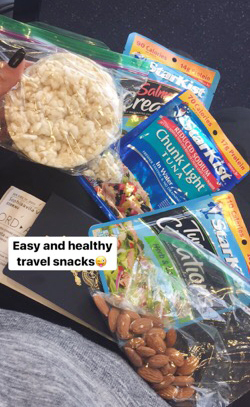
Bring powered protein powder in shaker cups
Tuna packets (minimal packing space, lean + high protein)
Protein bars
Dried meat
Fruit/nuts (almonds for essential fats)
Yogurt cups
Rice cakes (for quick carbs)
Microwavable oatmeal
Depending if you are traveling in the country and for a minimal period of time, it is possible to also prep proteins such as chicken and freeze them
If I am traveling while
on prep, I make sure that I bring all of my meals with me, that way I always
have something to eat and I am on track with my goals.
If I am not on prep and
on vacation with my family, I do bring healthy snacks like the ones I listed in
this article, but I do treat myself on occasion. When I was visiting South
Africa, we went on a lot of trips, some including safaris. For this, I had to pack
a variety of snacks that I could bring to sustain me for a few days.
When I am prepping for a
show, I have to be strict with my diet, but if I am in off season, I let myself
enjoy in moderation with good health in mind.
Navigating the Airport
Airports are typically
filled with fast food options. It is still possible to stay on track. While I
was waiting for my flight in Atlanta airport, I went to Starbucks for
breakfast. Starbucks is a great on the go food stop, they include the calories
on their menu and they have a variety of healthy food options.
Use a Meal Prep Service
& Stay Somewhere With a Kitchen
Meal prep services have
become very popular as well in several states, if you are traveling to another
state and want to have your meals ready, you can customize your meals online
and have them ordered to where you are staying. If you do decide to meal prep
your own meals to travel, I recommend using Ziplock bags and Tupperware to
store your foods and minimize space. Prepping your food close enough to the day
that you travel will ensure that your meals stay fresh.
Airbnbs are great for
traveling; you have access to a kitchen where you can cook your own foods,
which will help to save money on eating and ordering out.
Order Healthfully When
Eating Out
I believe everything in
moderation. It is essential to treat yourself on vacation. Going out to
different restaurants and trying different foods is a wonderful bonding
experience. If you want to make healthy eating choices, there are ways to order
food to make it more nutritious when eating out. Some ways to do this include:
Asking for dressing on the side
Asking to be cooked without oil
Seeking out grilled items
Ordering a side salad instead of something higher in calories
Order water
Share dessert
Staying Healthy While Traveling is EASY – Just Keep It Simple
Traveling should not be
a time to over-analyze your diet and fitness. ‘Everything in moderation’ should
be the foundation to a healthy lifestyle. Staying healthy while traveling IS
possible – it just takes some planning!
Post written by FFC Old Town membership representative Sophia Valbuena.
About Sophia
https://dev.ffc.com/wp-content/uploads/2019/09/Staying-Healthy-While-Traveling-Wellness-Chicago-FFC.jpg7001140Sydney MeyerSydney Meyer2019-09-25 11:42:392019-09-25 11:42:39Strong Mind | Strong Body #4: Staying Healthy While Traveling
You may have heard that a smart grocery shopping tip is to ‘power shop the perimeter’ of the grocery store when considering nutrition – where all the healthy produce, meats/fish and dairy are. Here’s why that’s a myth, and why smart grocery shopping can ALSO include the inner aisles.
While the common thought
is to only shop the perimeter (and that’s not completely wrong), I
recommend starting on the perimeter, using it to fill most of your cart
with produce and a quarter with protein – whether from animal or plant sources),
which include fruits, veggies, fish, chicken, eggs and dairy products.
It might be tempting to
stop there, but there are some nutrient-dense options that can only be found in
the middle aisles that you would be missing out on if you skipped them! Here
are some other smart grocery shopping tips to make sure you get the most out of
your visit.
Smart
Grocery Shopping Tips for the Inner Aisles of the Store
Plant-Based
Sources of Protein
Sometimes tofu and meat
substitutes are found on the perimeter, but another important staple is legumes
(beans and peas), which are found in the aisles. You can choose to buy dried
beans for cheaper and cook them from scratch, or you can choose to buy canned
beans for convenience and rinse them before serving. Either way, legumes will
pack your plate with protein and soluble fiber, which is great for gut health
and satiation. This type of fiber is digested slowly, helping to control blood
sugar and stave off cravings later in the day.
Whole Unprocessed Grains
Many grains are
ultra-processed, turning them to food that can increase our hunger hormone
ghrelin and leave us wanting more. However, the middle aisles hold the
important whole, unprocessed grains such as quinoa, brown rice, oats, barley,
and more. These nutrition powerhouses give our bodies energy through quality
carbohydrates and B vitamins.
Fresh isn’t actually
always best, which is why frozen fruit and vegetables are a good staple
in the freezer aisle. During most seasons, most produce has to travel a far
distance to get to Chicago, and all that time they’re losing valuable
nutrients. When fruit and veggies are flash frozen off the vine, they maintain
the nutrients our body can absorb a bit better. While fresh can be tastier and
satisfying, don’t skip the frozen aisle to help stock up on produce!
Smart grocery shopping
tip: make sure there’s not a ton of added sugar or sodium to these foods. Look
at the ingredient list to double check!
New and Interesting Products
While there’s a lot of
products I wouldn’t recommend (low-fat and sugar-free labels, I’m looking at
you), there are some great new products popping up on the shelves to balance
out meals and snacks. Some of my current favorites are roasted chickpeas, pasta
made from legumes, and snack bars made from fruit and nuts only. These all
still follow my general rule of 5 ingredients or less and ingredients I’d have
in my own kitchen!
Want these smart grocery
shopping tips & information individualized to you, specifically, on a
grocery store tour with Amy? Email her at asilver@ffc.com!
You’ll spend an hour on the perimeter, in the aisles or both – which can help
you determine the best choices for you and your family when shopping.
Post written by FFC Oak Park RD & Nutrition Coordinator Amy Silver.
About Amy
My passion for nutrition and fitness is shown through my personal life as well as in my career, and sharing that passion with others makes me excited to come to work every day. Here, I am able to combine my past experiences as a group exercise instructor and in clinical nutrition into one.
My personal goal is to work together with patients to determine what behavior changes they’re ready to make, and how to incorporate them into their lives. Using motivational interviewing skills, my patients will leave my office feeling ready and able to reach their goals.
https://dev.ffc.com/wp-content/uploads/2019/09/Smart-Grocery-Shopping-Tips-Shopping-The-Perimeter-Is-A-Myth-FFC-Nutrition-Chicago.jpg7001140Sydney MeyerSydney Meyer2019-09-20 10:49:532019-09-20 10:49:53Smart Grocery Shopping Tips: You Don’t Only Have to Shop the Perimeter
Got 10 minutes to spare? Of course you do! Check out this compact, 10 minute workout for beginners by FFC Park Ridge group fitness instructor Julia Baraglia that you can fit in no matter what life throws at you.
Think
of all the 10-minute intervals throughout your day you ‘waste’ on things like
Facebook or Twitter, games on your phone, or the random internet browsing or
nighttime TV that has no real significance to you. Everyone, even the busiest
CEO or frequent traveler can find a 10-minute window in his or her day.
So now
that you’ve discovered when that might ben, what am I asking you to do with it?
I’m so glad you asked! Check out this simple 10 minute workout for beginners:
10 Minute Workout For Beginners Breakdown:
0-2 minutes: sit still. No, truly. Sit still in a chair or on the floor with nothing around you. Take a deep breath and be thankful you’re in that moment. Appreciate all the things your body does for you (despite not always making the best food choices) or the long hours you work, often with a lack of sleep. Ahhh… feels nice, right?
2-4 minutes: move your body. Notice any aches, pains, or tense areas. Roll your shoulders, your neck, and arch/curve/twist your back to encourage blood flow to those areas and work out the kinks. Although certainly not as enjoyable as someone else doing it for you, self-massage does work. For my more dedicated athletes, foam roll your trouble spots.
4-9 minutes: really move your body. No REALLY – use the next 5 minutes to get your heart rate as high as you can. Push each exercise as hard as you can for one minute. Here’s my example workout – but you can keep it simple by doing stairs or running for 5 minutes as well.
Jumping Jacks
Squats
Push-ups
Mountain Climbers
Planks
9-10 minutes: rest. Close your eyes. Listen to your breathing and your heart beating. Those 5 minutes you just did will improve your cardiovascular health, boost your metabolism and make you mentally sharper. And that’s just the beginning of a long list of benefits!
This
10 minute workout for beginners can be done before your morning shower, during
your lunch break, before you get ready for dinner or even when you get back to
your hotel room. Once you find you can carve 10 minutes out of your day, soon
you will discover that there are days you have a half hour, hour, or maybe even
more to sit still, really move, and rest.
Post written by FFC Park Ridge group fitness instructor Julia Baraglia.
About Julia
Julia is a group fitness instructor at FFC Park Ridge and is passionate about helping people achieve their fitness goals and improve their overall well-being.
She believes working out is just as important for your mental health as your physical health – and definitely gets this as a mom of 3 young boys! Check out the group fitness schedule to see her class lineup and email her at julia.baraglia@ffc.com with any questions!
https://dev.ffc.com/wp-content/uploads/2019/09/10-Minute-Workout-For-Beginners-FFC-Fitness-Chicago.jpg7001140Sydney MeyerSydney Meyer2019-09-19 16:43:532019-09-19 16:43:5310 Minute Workout for Beginners: It’s Easier to Fit In Than You Think
FFC West Loop esthetician breaks down some skin care routine
best practices, including 5 reasons you should see an esthetician!
Why should I see an esthetician?
Having a regular, at-home skin care routine and regimen with
your esthetician is important. Regular exfoliation and extractions ensure you’re
in the clear!
We tend to care about the surface more than we care about what’s underneath. We’re willing to spend a TON on hair products and makeup – instead we should be investing in our skin care and scalp!
How often should I see an esthetician?
You should see your esthetician every three weeks. #treatyoself!
Why are we always so quick to do everything for everyone except ourselves? It’s
okay to have an hour to yourself every 3 weeks. If no one else tells you that,
now I have!
What can an esthetician do for my skin care routine?
When it comes to the offerings of your skin care expert, there are a few things estheticians can do, including:
What are these? Exfoliation removes the top layer of dead skin cells
that trap bacteria, oil and dirt under the skin, which tend to cause breakouts.
Exfoliation is great to help correct hyperpigmentation (darkened patches or
spots on the skin). Extractions remove sebum, oil, blackheads and whiteheads from
the skin, which clear out the pores. Exfoliation and extractions are essential
for good skin and should be part of your skin care routine.
Waxing/Lasering
When it comes to your skin care routine and shaving vs waxing or
lasering – I’m gonna keep it real. Shaving will cause you irritation, bumps,
breakouts and a ton of hyperpigmentation.
Lasering isn’t for everyone – if your hair is too light, the
laser won’t be able to find it; if your skin is too dark, the laser can burn
you.
Yes, waxing does hurt, but staying consistent not only lessens
the pain over time, but will also lessen your hair growth. As long as you don’t
shave, trim or tweeze between your sessions, your hair follicles will die and
that hair won’t grow back!
Counteract Sun Damage
Why do we still think SPF is an option? Sun damage to your skin
is detrimental and very hard to reverse (though certain treatments can help).
Skin cancer is NEVER worth it. You not only should apply, but re-apply,
especially when spending time in the sun.
Your esthetician can help you navigate all the types of SPF –
serums, lotion, even in your makeup! Invest in products that not only make you
look good, but also make your skin feel good.
Post written by FFC West Loop esthetician Ariana Wade.
About Ariana
Ariana (Ari) went to Paul Mitchell the School for esthetics and
finished back in 2015. She dove right into the industry & she absolutely
loves skincare and making people feel beautiful. Fun fact about her: she is actually
back in school to receive her license for teaching esthetics.
You will always be in good hands with her! For any questions or to set up a complimentary consultation with her at the one of the FFC spas in Chicago, email her at awade@ffc.com!
https://dev.ffc.com/wp-content/uploads/2019/09/Add-This-To-Your-Skin-Care-Routine-5-Reasons-To-See-An-Esthetician-FFC-Skincare-Chicago.jpg7001140Sydney MeyerSydney Meyer2019-09-19 12:27:532019-09-19 12:27:53Add This to Your Skin Care Routine: 5 Reasons to See an Esthetician
Is your golf swing not
as strong as you would like it – or is your forehand in tennis more like a fore
finger? Do you have trouble accelerating or jumping in your basketball
games? Ballistic training and plyometrics may be your answer. (And they might
be the most underrated and under-represented exercise mode in the gym
today).
Ballistic Training vs
Plyometrics
Ballistic training is
described by throwing or jumping with weight, which maximizes acceleration of
the weight, with little or no deceleration of the muscles. (2) Plyometrics is defined
as the discipline of performing maximal effort, burst-based movements that use
the stretch/shortening cycle of the muscles to produce a powerful result (e.g.
repeated box jumps). It was first used by Soviet Olympians in the 70s and is
used today with college/professional athletes as a form of sports fitness
training. (1)
An In-Depth Look at
Ballistic Training
In traditional weight training, the load has to be decelerated in order to protect the joints and to end the repetition. However, this act teaches the body to slow down during ‘sticking points’ or rather, the hardest parts of a repetition – and these (necessary) points can cause an athlete to plateau.
The National Strength and Conditioning Association’s Basic Guidelines for the Resistance Training of Athletes states that “performing speed repetitions as fast as possible with light weight (i.e. 30-45% of a one-rep max) in exercises in which the bar is held on to and must be decelerated at the end of the joint’s range of motion (e.g., bench press) to protect the joint and does not produce power or speed training, but teaches the body how to decelerate, or slow down. If the load can be released into the air (i.e., the bar be let go at the end of the range of motion) the negative effects are eliminated.” (3)
Why
Ballistic Training Works for Fitness:
Basically,
as much as 75% of a repetition can be devoted to slowing down the weight – not actually
producing power/acceleration. Being able to let go of the weight, ball, or
load, is paramount for developing power and strength throughout the entire
range of motion for ANY movement. Examples for ballistic movements include
medicine ball throws, weighted jumps, and banded movements.
An
In-Depth Look at Plyometrics
In
the strictest sense, plyometrics are used to teach athletes to jump higher and
run faster by using the inherent elasticity in muscles and tendons. An example of this is called a depth-jump. The
athlete steps-down from a high box, lands, and immediately jumps onto another
box. This causes the athlete to compensate for the force of gravity by
absorbing the impact via lengthening the muscles and going into a quarter squat
(eccentric motion). Once the energy has been absorbed, the muscles are the same
length for the briefest of moments (amortization), then, the athlete contracts
the glutes/quads to jump again (concentric motion).
By training this
stretch-shortening cycle to happen faster, and under higher loads, you can
train the nervous system and musculature to jump higher and more quickly. This
same principle can be applied to upper body workouts using bands and medicine
balls, creating a cycle of stretch shortening that helps create more power and
speed.
Benefits of
Plyometrics and Ballistics Training
You’re probably thinking, ‘okay, but what does all this sciencey mumbo-jumbo mean?’
In essence, ballistic and plyometric movements
force the muscles to produce the greatest amount of force in the shortest
amount of time. Muscle fibers are stimulated according to the force/power
needed. Low speed/heavy weight moves will use smaller type fibers first, then
larger and larger fibers until the load is lifted. However, with plyometrics
and ballistic training, the largest are recruited first to make the lift/action
as quickly and efficiently as possible.
The more you practice these explosive
movements, the better you train your muscles to act as efficiently and
powerfully as possible.
This brings
us to my preferred type of training – complex/contrast training. In this type
of training, slow, near maximal weightlifting motions followed by
fast-speed/fast-twitch plyometrics or ballistics training moves has been
demonstrated to activate the larger muscle fibers to a greater degree than if
you were to complete each type of exercise separately. (4)
By now you might be thinking ‘Okay… but what does that mean in plain English, Matt?’ How does ballistic training/ plyometrics apply to your daily life? Here are the basic benefits of plyometrics and ballistic training for improved performance:
You will accelerate faster: sprinting by someone on the court, down the field, to the train etc.
You will jump higher (and it looks cool)!
You will gain definition and size (not designed for bodybuilding, but it can be adapted).
You will punch harder and faster, throw a ball harder and farther.
Develop a stronger, more stable core and flatten the stomach; stabilizing fast moving weight will emphasize stronger abdominals, obliques and spinal erectors.
Burn more calories from the full body workouts (lean out!) Coordinating multiple joints for an explosive motion at a high intensity is a great conditioning and cardiovascular workout.
You will have more energy in your everyday life!
You will conduct everyday movements with more “oomph” and be able to produce power on command! You will fly out of your chair at the end of the work day.
If you are interested in ballistic training or plyometrics, or would like to know more, please contact me at mlamore@ffc.com or via @lamorepower on Instagram!
Post written by FFC West Loop trainer Matt Lamore.
About Matt
Matt
Lamore is a certified strength and conditioning specialist and master trainer
at FFC West Loop specializing in plyometrics, circuit training and
powerlifting. He uses his background in sports performance training to bridge
the gap between the gym and daily life. Before FFC, he has trained high school,
Division 1, and professional athletes in strength, agility and speed. Matthew
received both his B.S. and M.S. in biology from Bucknell University.
(2): Fleck, Steven J. & Kraemer, William J., ‘Ballistic Training’ in Designing Resistance Training Programmes, Human Kinetics:Leeds, 2013, p.280
(3) (Elliot, B. and Wilson, G. A biomechanical analysis of the sticking region in the bench press. Medicine and Science in Sports and Exercise. 21: 450-464. 1989).”
(4) Joyce, David & Lewindon, Daniel & Larson, Rett, ‘Neural Preparation’ in High Performance Training for Sports, Leeds:Human Kinetics, 2014, p.107).
https://dev.ffc.com/wp-content/uploads/2019/09/4.png14002800Sydney MeyerSydney Meyer2019-09-18 15:57:432019-09-18 15:57:43Sports Fitness Training: Ballistic Training & Plyometrics to Bridge the Gap Between the Gym & Court






 More about Katie: Katie is a group fitness instructor at FFC and is also a personal chef based in Chicago. She specializes in creating delicious, healthy recipes for those with special dietary concerns like gluten-free, oil-free, plant-based, and low-residue. You can see more at